The Small Cue That Gives a Routine Its Shape
Learn how a small cue can make a routine easier to remember, using a clear prompt, a sensible place and a plan for moments when it is missed.
What would help you remember a routine without turning it into another task to manage? A small cue can make a routine easier to remember by giving it a recognisable prompt: a note beside the kettle, a calendar entry, or a particular object placed where you will see it. The cue is not a command to act; it is a pointer that brings an intention back into view.
Choose a cue that is visible and easy to interpret
A useful cue is specific enough to mean something to you. A notebook left open on the desk suggests writing; a generic object in a crowded drawer does not. Choose a place or prompt you encounter naturally, and make sure it does not create a safety or accessibility problem in the space.
Different cues suit different kinds of routines. A physical object can work well for an action that happens at home, while a calendar reminder may be clearer for something tied to a date or appointment. A phone alarm is another option, though repeated alerts can become background noise if they compete with other notifications.
Write the intended action in plain language. “Read one page after lunch” is easier to recognise than “make time for reading”. The cue should identify what you meant to do, not imply that a routine must be performed perfectly.
Put the reminder where the decision happens
A cue is most useful at the point where you can decide what to do next. If you want to pause before opening work messages, a note beside your laptop may be more relevant than one across the room. If you plan to stretch after getting home, a card near the place where you put your bag can bring the intention to mind before you settle into another activity.
Say you want to remember to water a windowsill plant. Imagine that you often notice the plant while making breakfast, but the watering can is stored in a cupboard. You place the can beside the sink and add a note saying “check the soil”; at breakfast, you can inspect the soil and water only if it feels dry. The observable result is a prompt to check the plant, while the note leaves the watering decision dependent on what you see.
Keep the prompt proportionate. A single card or one calendar entry is often clearer than several signs and alerts repeating the same instruction. Like a bookmark, a cue marks a place to return to; it does not insist that you continue reading when the moment is unsuitable.
Set up the cue with a simple decision rule
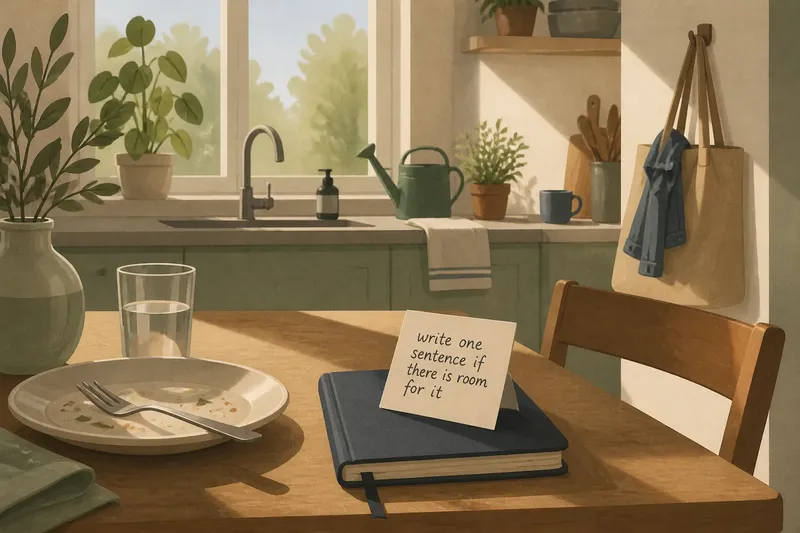
Before relying on a prompt, decide what should happen when it appears. A short rule can prevent the cue from feeling vague: “When I see the notebook, I will write a sentence if I have a quiet moment; otherwise, I will leave it for later.” The rule names the action and allows a sensible alternative.
- Check whether the cue is visible at the intended moment; if it is hidden, move it to that location, or choose a prompt you will naturally encounter.
- Check whether the wording names a concrete action; if it is vague, rewrite it plainly, or remove the cue until you know what it should prompt.
- Check whether the action is possible in that setting; if it is not, choose a compatible action there, or move the reminder to a suitable place.
- Check whether the cue competes with other alerts; if it gets lost among them, use a physical prompt, or give the digital reminder a distinct, direct label.
- Check whether the prompt makes the moment feel crowded; if it does, reduce the action, or choose a quieter moment.
- Check whether the routine still serves a purpose you care about; if it does, keep the cue, or pause or replace the routine if it no longer fits.
What should you do when a cue does not fit?
Should I continue after missing the cue?
You can return to the routine at the next suitable opportunity; there is no sequence to repair. If the original prompt is no longer relevant, choose a new one rather than trying to recreate the missed moment.
What if the cue appears when I am busy?
Let the action wait if doing it then would create pressure or interrupt something important. If this happens often, move the cue to a less crowded moment or make its wording remind you to choose a later time.
Is an alarm better than a physical reminder?
Neither is always better: an alarm suits a time-specific action, while an object or note can be easier to notice in a particular place. If alerts are easy to dismiss, try a physical cue; if you need a prompt while away from home, a calendar reminder may be more useful.
How can I tell whether the cue is working?
Notice whether it brings the intended action to mind at a useful moment, rather than judging yourself by how often you complete it. If you see the cue but cannot act there, change its location or give yourself a clear alternative.
Work through one cue from prompt to decision
Imagine you want to remember to write a short note about the day, and you have a notebook, a kitchen table and a variable evening routine. As an invented starting point, suppose you tend to clear the table after dinner, but you do not always have time to write then.
- Choose the cue: clearing the dinner plate and returning it to the kitchen. This is a recognisable event in the setting you have chosen.
- Place the notebook on the table, with a card that says “write one sentence if there is room for it”. The notebook is visible where the decision will happen.
- When you clear the plate, check whether you have a quiet moment. If you do, write one sentence; if you do not, leave the notebook in place for the next evening rather than rushing.
- After several ordinary occasions, notice the result: either the prompt makes writing easy to remember, or it repeatedly arrives during a busy period. In the first case, keep it; in the second, move it to a calmer cue, such as sitting down with a cup of tea.
The point of the example is the decision it makes visible: a cue can prompt an action without dictating that it must happen immediately. Small cue routine design is less about controlling a day than making an intention easier to recognise, with enough room to decide what fits.
Keep the reminder in service of the routine
A cue can become clutter if it stays in place after the routine has changed. Remove or revise reminders that no longer match what you want to do; otherwise, they may keep asking for attention without helping you make a useful choice.
It is also reasonable to pause a routine. If the action has stopped serving you, the cue does not need to be preserved for its own sake. A reminder should help you notice an option, not turn an ordinary moment into a test of character.
Keep the prompt simple, place it where the decision happens, and give yourself a clear alternative for busy moments. The best cue is not the one that demands the most attention, but the one that helps you recognise what you meant to do and decide whether it fits now.